
Understanding Ringlock Scaffolding and Its Role in Modern Construction
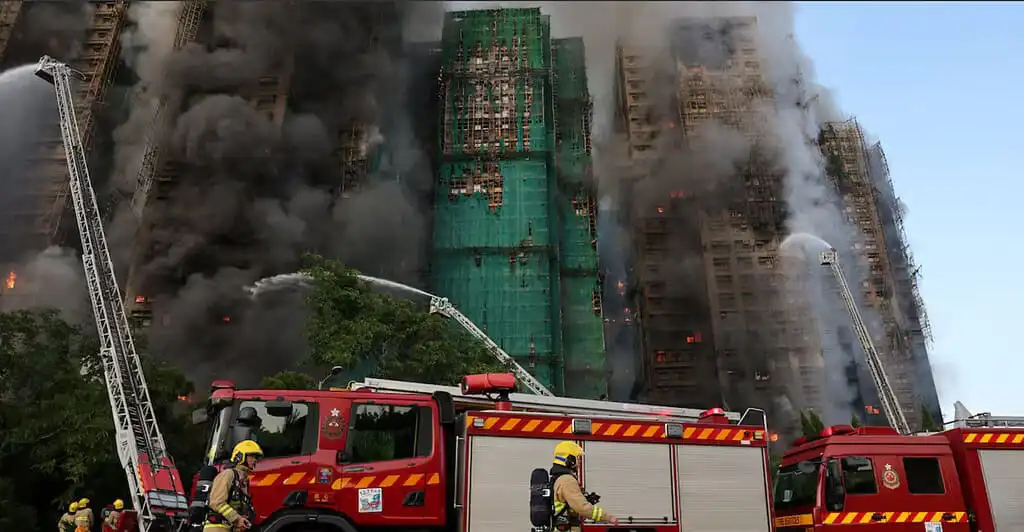
In today’s rapidly evolving urban environments, construction safety is no longer optional — it’s an essential foundation for protecting workers, residents, and entire communities. This truth has been tragically underscored by recent events, such as the devastating fire that erupted on 26 November 2025 at Wang Fuk Court, a public-housing complex in Tai Po, Hong Kong. The blaze engulfed scaffolding-wrapped buildings and swiftly spread across seven residential towers, ultimately becoming one of Hong Kong’s deadliest residential fires in decades.
As official investigations revealed, a major factor in the enormous loss of life was the flammable exterior netting and scaffolding materials — including plastic mesh and bamboo scaffolding — used during ongoing renovation works. Many of those materials reportedly failed fire-resistance standards, which allowed flames to race up building exteriors and trapped hundreds of residents inside.
This tragedy has reignited public concern over the safety of exterior protective structures used in construction and renovation projects. In dense, high-rise urban environments — where population density, vertical living, and limited exit routes are the norm — the design and material quality of scaffolding and façade protection systems are not just about convenience or cost: they can be a matter of life and death.
Against this backdrop, ringlock scaffolding has emerged as a significantly safer alternative — not merely an incremental improvement, but potentially a life-saving structural upgrade.
How Ringlock Scaffolding Addresses Key Safety Failings
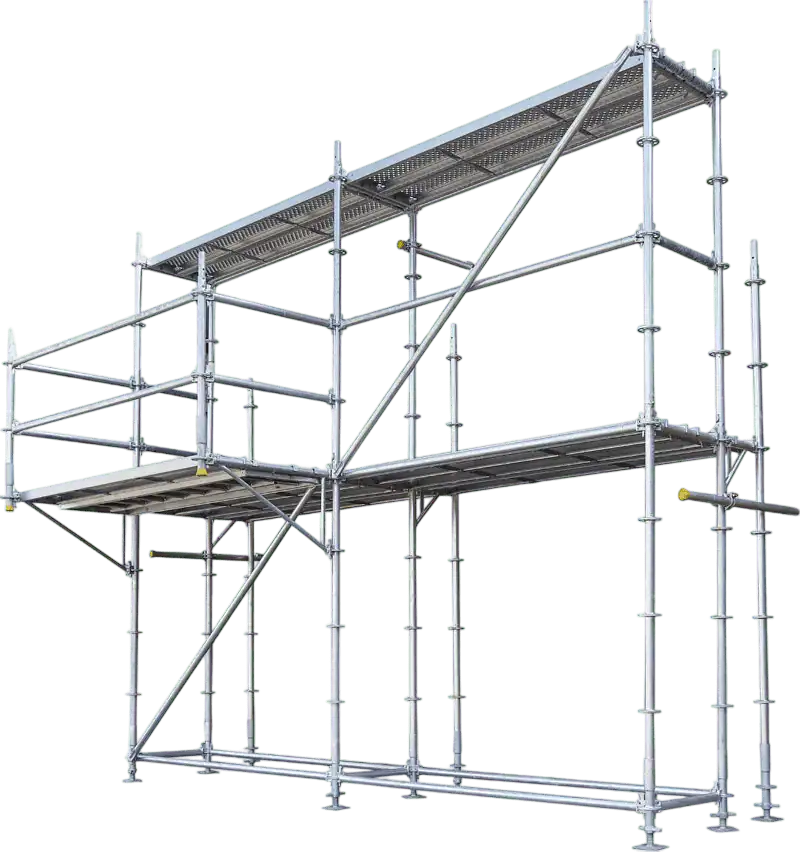
Ringlock scaffolding, by contrast, offers a fundamentally different approach — one rooted in material integrity, structural logic, and fire safety from the ground up:
- It uses high-strength structural steel (e.g. Q355B), which remains stable at high temperatures and does not combust, melt, or release toxic smoke.
- Its modular and fully metal construction eliminates the need for flammable mesh, plastic wraps, or temporary wooden elements on building exteriors.
- The system’s geometry and robust node connections provide stable load-bearing and resistance to collapse, even under extreme conditions.
- By integrating safer scaffolding systems from the outset, projects can dramatically reduce the risk of façade–scaffolding fire propagation, especially in high-density housing or mixed-use developments where many people live or work.
In short, ringlock scaffolding is not just a matter of convenience or efficiency — in the wake of disasters like the Wang Fuk Court fire, it’s increasingly clear that choosing safer structural scaffolding and façade protection systems can directly save lives and prevent catastrophic chain-reactions.
Why Cities Need Safer Scaffolding Systems
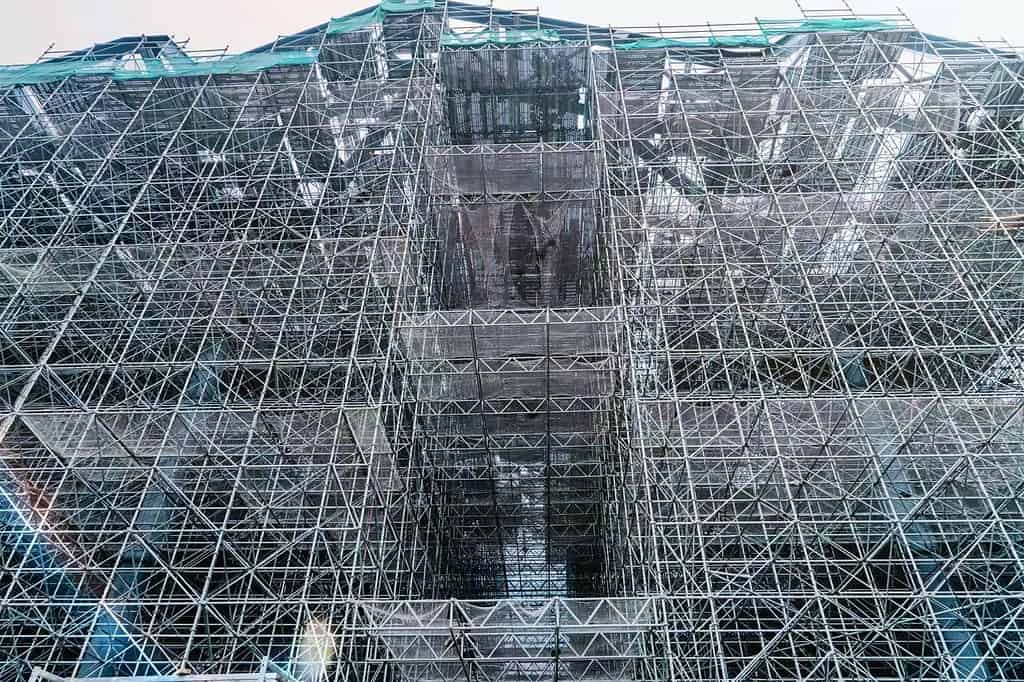
Dense cities, tall buildings, complex façades, and harsh weather conditions create a high-risk environment for outdated scaffolding systems. Recent high-rise fire incidents—including one in Hong Kong—have highlighted how critical it is to adopt scaffolding that can withstand fire, impact, and extreme weather while supporting efficient emergency response.
Traditional Systems vs. Ringlock Scaffolding
| Aspect | Traditional Scaffolding | Ringlock Scaffolding |
|---|---|---|
| Connection | Clamps, bolts, couplers | Bolt-free rosette connectors |
| Safety | Risk of loose couplers, corrosion | High-strength nodes, no loose parts |
| Efficiency | Slow assembly | Fast plug-in assembly |
| Fire Safety | Combustible elements may exist | 100% non-combustible metal |
| Durability | Frequent corrosion, repainting required | 15–20 year lifespan |
Ringlock scaffolding clearly outperforms traditional systems in every major safety metric.
Material Advantages: How Q355B Steel Reinforces System Safety
At the heart of ringlock scaffolding is Q355B low-alloy structural steel, a material known for its outstanding strength and high-temperature resistance.
Mechanical Strength and Fire Performance of Q355B
Q355B provides:
- High yield strength
- Excellent tensile performance
- A melting point up to 1500°C
This means even under extreme fire conditions, the structure retains integrity long enough to support evacuation and rescue efforts.
A-Class Non-Combustibility and High-Temperature Resistance
Because ringlock scaffolding is made entirely of metal:
- It cannot burn
- It does not spread flames
- It releases no toxic smoke
National testing confirms that ringlock scaffolding meets the A-class non-combustible standard, offering over 2 hours of fire resistance.
Structural Logic: Why Ringlock Scaffolding Is More Stable
Beyond materials, the revolutionary geometry and connection system make ringlock scaffolding one of the safest and strongest systems available.
The 8-Hole Rosette Node and Axial-Force Transmission
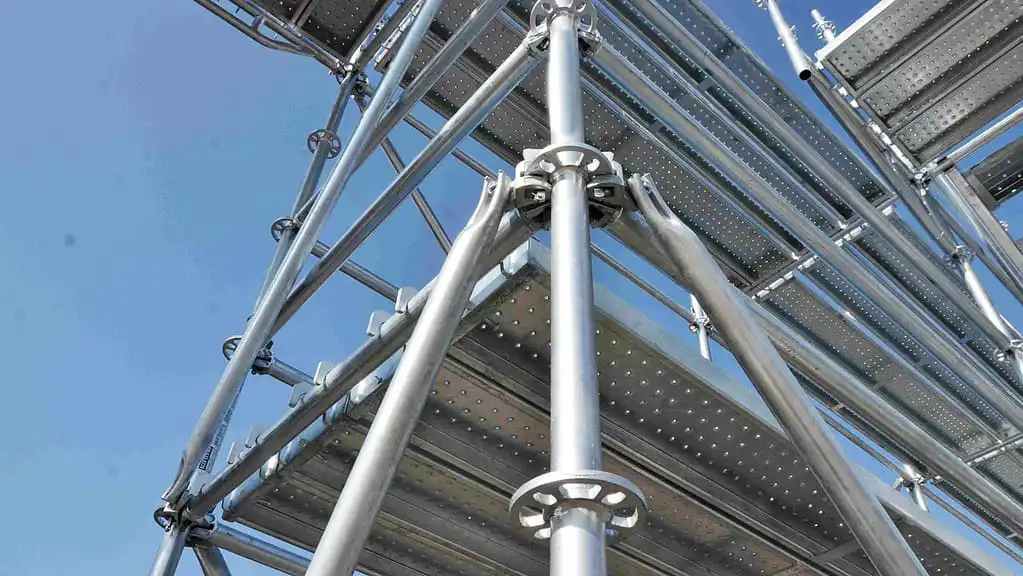
The rosette node design allows:
- Multi-directional connections
- Axial force transfer
- Even load distribution
- Up to 10 tons of load per standard vertical post
Additionally, each node achieves an anti-shear capacity of 40 kN, far exceeding what traditional scaffolding can provide.
Rigid Triangular Bracing and 80% Lateral Stability Improvement
By integrating diagonal braces with vertical and horizontal members, ringlock scaffolding forms a rigid triangular framework, increasing lateral resistance by 80%.
Even in Level-10 strong winds, the structure maintains stability—critical for high-rise projects.
High-Efficiency Construction: Fast Assembly and Safe Operation
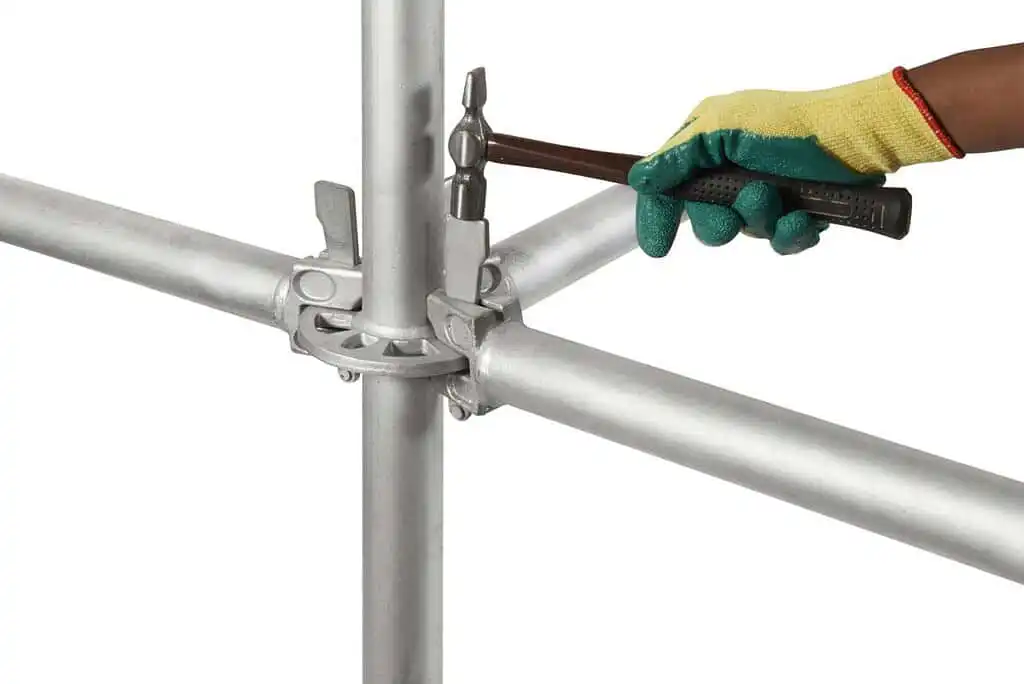
Speed is a major advantage of ringlock scaffolding.
Completing 100 m² of Structure Within 30–40 Minutes
Workers can assemble ringlock scaffolding using only:
- Standardized components
- A single hammer
- Simple plug-in connections
No bolts, wrenches, or complicated adjustments are required. This drastically reduces human error and high-altitude operation time.
Lower Labor Input and 40%–50% Labor Cost Reduction
Because the system is intuitive and standardized:
- Only 1–2 workers are needed per working face
- Overall labor input decreases by up to 50%
- Construction becomes safer and more predictable
This makes ringlock scaffolding highly suitable for large-scale, time-critical projects.
Full Life-Cycle Economic Value of Ringlock Scaffolding
≥75 μm Zinc Coating and 15–20 Years Service Life
The hot-dip galvanizing layer protects ringlock scaffolding from:
- Moisture
- Salt spray
- Long-term outdoor exposure
With a lifespan of 15–20 years, maintenance needs are extremely minimal.
90% Reuse Rate and Sustainable Construction Advantages
Because ringlock scaffolding has no bolts, clamps, or easily lost parts, it achieves:
- 90%+ reuse rate
- Near-zero annual maintenance
- 90% reduction in traditional maintenance costs
Although initial investment is 20%–40% higher, projects often recover costs after one use cycle. Long-term projects can reduce overall expenses by 10%–15%.
Technical Leadership and Industry Standards by Rapid
As a pioneer in China’s ringlock scaffolding field, Rapid Group has led the development of national technical standards, including:
- JGJ/T 231-2021 – Technical Standard for Ringlock Scaffolding Safety
- JG/T 503-2016 – Product Standard for Ringlock Scaffold Components
These standards play a crucial role in promoting high-quality, standardized development across the entire industry.
For additional reference, you may consult internationally recognized resources such as engineering safety guidelines from global construction associations.
Frequently Asked Questions (FAQs)
1. What makes ringlock scaffolding safer than traditional scaffolding?
The bolt-free rosette node, high-strength steel, and rigid triangular structure offer superior strength and stability.
2. Can ringlock scaffolding be used on high-rise buildings?
Absolutely. It is designed to handle high wind loads, complex façades, and heavy structural demands.
3. How fire-safe is ringlock scaffolding?
It is fully non-combustible, meets A-class fire standards, and withstands over 2 hours of fire exposure.
4. What is the typical lifespan of ringlock scaffolding?
With proper galvanization, it lasts 15–20 years with minimal maintenance.
5. How does it reduce labor costs?
Fast plug-in assembly reduces workforce requirements by up to 50%.
6. Is ringlock scaffolding compliant with national standards?
Yes, and major standards in China were developed by Jiangsu Sujie, reinforcing its authority.
Conclusion: A System Upgrade for Safer, Smarter Construction
Ringlock scaffolding is transforming the construction industry. Its combination of high-strength materials, scientific structural design, lightning-fast assembly, and long life-cycle value represents a major leap in safety and efficiency.
In a world where construction risk continues to increase, adopting ringlock scaffolding is not just an equipment upgrade—it is a commitment to protecting lives, improving quality, and building a safer future.
Pingback: ivermectin rosacea inflammation reduction
Pingback: minoxidil help & answers
Pingback: minoxidil mechanism absorption link
Pingback: avanafil pricing overview
Pingback: vardenafil pharmacodynamics
Pingback: augmentin medical facts
Pingback: Duration Knowledge Center
Pingback: sildenafil versus tadalafil